


Understanding the Difference Between Asset-Centric Systems Like GAGEtrak and Strong Calibration Software
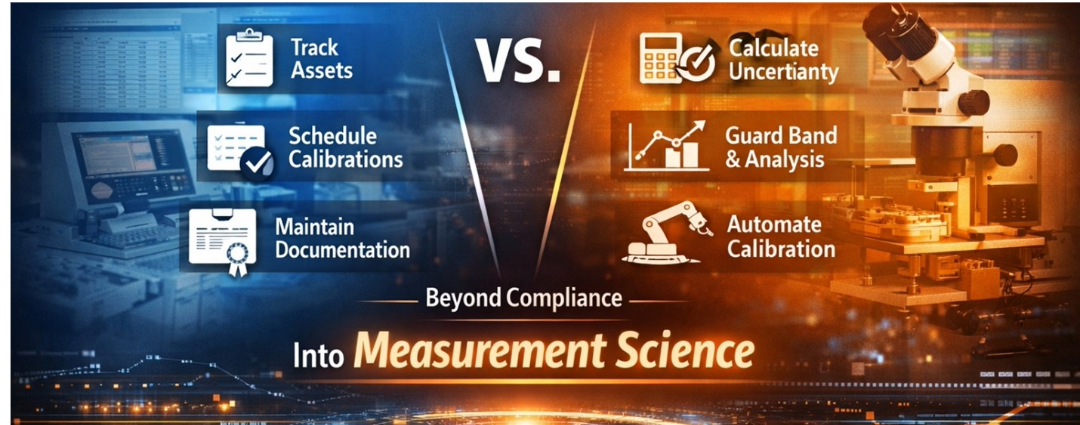
When organizations decide to bring structure to their calibration processes, the initial goal is usually straightforward: track assets, schedule calibrations, maintain documentation, and support audit readiness.
When searching for calibration software, many organizations quickly encounter systems such as GAGEtrak. These systems are widely used across industry and provide strong capabilities for equipment record management, scheduling, and calibration documentation.
For many organizations, especially those that outsource calibration or operate in lower-risk environments, this level of control can be sufficient.
However, over time many laboratories and manufacturers discover that tracking calibration activity is not the same as executing measurement science. As technical requirements grow, the distinction between asset tracking software and measurement-execution platforms becomes more important.
This article helps clarify that difference.
What Asset-Centric Systems Do Well
Asset-centric systems are designed primarily around equipment management and calibration record keeping.
Their strengths typically include:
- Maintaining an equipment and gage database
- Managing calibration intervals and scheduling
- Generating work orders and calibration labels
- Storing pass/fail calibration results
- Maintaining audit documentation and records
These systems are valuable for organizations where calibration management is primarily an administrative task focused on compliance and visibility.
They ensure equipment is tracked, calibration events are recorded, and audit documentation is maintained.
For many organizations, that is exactly the level of control required.
What Measurement-Execution Calibration Software is Designed for
More advanced calibration environments often require deeper technical control over the measurement process itself.
In these environments, calibration software functions less like an asset tracker and more like an engineering platform.
A measurement-execution software typically supports:
- Measurement uncertainty modeling and calculation
- Guard banding aligned with industry standards
- Test-point-level data collection and historical analysis
- Automated instrument control and data capture
- Drift analysis and recall impact evaluation
These capabilities allow organizations to control not just whether a calibration occurred, but how measurement decisions are technically justified.
This level of control becomes increasingly important for organizations operating under:
- ISO/IEC 17025:2017 accreditation
- Aerospace manufacturing environments
- Regulated industries
- Internal metrology laboratories
In these cases, calibration is not simply a maintenance activity — it is a measurement science process.
Where Modern Software can Bridge the Gap
In recent years, modern metrology platforms have begun to bridge the gap between asset tracking systems and measurement-execution platforms.
Software like MOX is designed to support both operational approaches.
- equipment asset tracking
- calibration scheduling
- documentation and compliance management
- automated measurement workflows
- measurement uncertainty calculations
- guard banding decision rules
- test-point level historical analysis
This approach allows organizations to manage both the administrative side of calibration and the engineering side of measurement within a single platform.
Since MOX is built with a modular architecture, organizations can choose how deeply they want to implement measurement automation.
Some laboratories use the platform to handle both asset tracking and measurement execution.
Others integrate it alongside an existing asset tracking system and use it specifically to control the technical measurement process.
This flexibility allows organizations to evolve their metrology systems without being forced into a single operational model.
The Core Difference
The distinction can be summarized simply:
Asset tracking systems manage calibration workflow and documentation.
Measurement-execution calibration software manages the Science of Measurement.
Both approaches have value, but they serve different operational purposes.
Organizations with complex technical requirements—such as accredited laboratories, aerospace manufacturing, utilities, and defense contractors—often require deeper measurement control to manage technical risk.
Conclusion
Before selecting calibration software, organizations should ask a fundamental question:
Are we trying to track calibration activity, or are we trying to control measurement integrity?
The answer determines whether an asset-centric calibration management system is sufficient or whether a deeper metrology platform is required.
Understanding this distinction helps organizations align their software tools with their true measurement risk, operational maturity, and long-term metrology strategy. As calibration environments continue to evolve, many organizations are discovering that the strongest solutions combine both asset tracking and measurement execution capabilities within a single modern platform.
Calibration asset tracking software manages equipment records, calibration schedules, and documentation. It helps organizations track instruments, schedule calibrations, and maintain audit records.
Not always. Many systems focus primarily on tracking equipment and calibration events. More advanced calibration software also manage the measurement process itself.
A measurement-execution calibration software supports the technical side of calibration, including measurement uncertainty, guard banding, automated data collection, and test-point level measurement history.
Many organizations search for calibration software when they first need to manage calibration schedules. Because of this, asset tracking systems often appear in search results alongside more advanced metrology calibration software.
Yes. Modern software like MOX can manage equipment tracking, calibration scheduling, and compliance documentation while also supporting automated calibration workflows and measurement science processes.