
MOX Calibration and Metrology Documentation
FAQs: Common Questions About MOX Calibration Software
MOX is a metrology and calibration software engineered specifically for measurement-centric environments. It combines calibration execution (MPS) and calibration management (CMS) into a unified system designed for ISO/IEC 17025 laboratories, manufacturers, utilities, aerospace, and other high-compliance industries.
Most systems focus on scheduling and documentation.
MOX embeds:
- Automated measurement uncertainty
- Guard banding
- Test-point level traceability
- Reverse traceability
- Persistent calibration history
- Instrument automation
It operates as a measurement platform — not just a compliance tracker.
Yes.
MOX supports:
- GUM-based uncertainty modeling
- RP-18 guard banding
- Automated uncertainty calculation during calibration execution
Uncertainty isn’t calculated after the fact — it’s embedded into the calibration workflow.
Yes.
MOX supports:
- Native instrument control via IEEE, RS232, GPIB, USB, and ethernet.
- Automated data capture
- Manual data entry (when required)
- Hybrid automation workflows
This reduces transcription error and increases repeatability.
Yes.
MOX supports:
- Test-point level traceability
- Audit-ready calibration history
- Documented uncertainty budgets
- Recall analysis
- Role-based permissions
- Electronic signatures
MOX is designed around defensible measurement practices.
Reverse traceability allows users to trace forward and backward:
- From a standard to all DUTs it influenced
- From a DUT to every standard used
- Down to individual test points
This is critical for recall analysis and audit defensibility.
Yes.
MOX maintains persistent historical data at the asset and test-point level, enabling:
- Trend analysis
- Drift monitoring
- Recall risk analysis
- Historical uncertainty review
Data is not flattened into pass/fail only.
MOX is self-hostable by default.
Customers can deploy via:
- On-premises servers
- Virtual machines
- Docker containers
- Cloud infrastructure
MOX does not hold data hostage. The SQL Server database remains under customer control.
Support for OpenID Connect is available in CMS, allowing integration with enterprise identity providers and advanced authentication workflows.
This supports enterprise security alignment.
MOX uses structured record handling to protect data integrity while avoiding the bottlenecks commonly experienced in rigid ERP systems.
Concurrent workflow handling is designed to support operational flow in laboratory environments.
Yes.
MOX supports integration through:
- SQL database access
- APIs
- Custom integration layers
It can operate standalone or as part of a larger enterprise architecture.
MOX is used in:
- ISO 17025 accredited labs
- Aerospace
- Defense
- Utilities
- Pharmaceutical
- Manufacturing
- Energy
Anywhere measurement quality drives risk exposure.
Yes.
MOX was developed by the same original architect behind Mudcats and represents a next-generation evolution — modernized architecture, expanded automation, and advanced uncertainty modeling.
Yes.
MOX MPS supports remote and offline calibration workflows with synchronization capabilities for field calibration environments.
Implementation timeline depends on:
- Data migration scope
- Complexity of procedures
- Automation depth
- Uncertainty modeling requirements
A phased approach is typically recommended for complex laboratories.
Yes.
MOX provides structured migration assistance and works with customers to align historical data, procedures, and uncertainty models into the new system.
You already have it.
MOX does not restrict database access. The SQL Server database is controlled by the customer.
This reduces vendor lock-in risk.
Yes.
MOX supports:
- Single-location labs
- Multi-site organizations
- Enterprise-level deployments
The architecture scales with operational complexity.
Measurement science.
Governance is supported — but the design philosophy is centered on defensible calibration execution and uncertainty integrity.
Common reasons include:
- Lack of uncertainty automation
- No reverse traceability
- Aging unsupported software
- Limited automation capability
- Insufficient historical analytics
- Need for defensible audit posture
MOX reduces operational friction while increasing technical rigor.
Blog & Articles: Insights on Calibration and Metrology
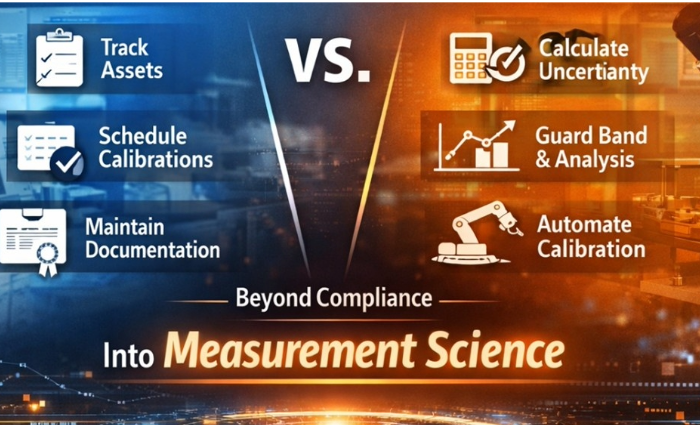
Asset Tracking vs Calibration Software
Find out how calibration software differs from asset tracking systems to better meet your organization's technical requirements.

What to look for in Calibration Software
Selecting calibration management software is not an IT purchase. It is an operational risk decision.

Uncertainty Simplified
See what MOX Metrology Process Studio (MPS) can do for your metrology operations.

Higher Quality, Faster Metrology Engineering
Ideal automated technological solutions to metrology-related quality challenges.

A Nuclear Perspective
A brief look at why MOX is the system of choice in the nuclear industry.